As a first responder, proper training can quite literally save your life. When your days consist of responding to people in some of their worst moments, you quickly learn that the world can be unpredictable. Fear, anger, adrenaline, and strong emotions can cause people to do things you might never expect. Situations can escalate in seconds, and when they do, your physical capabilities can become just as important as your training and decision-making.
That was a big part of my motivation to train during my years as a first responder. I wanted to be as prepared as possible for whatever the world threw at me. Whether that meant endurance, strength, or the conditioning to keep making good decisions under stress — I wanted to know that my body wouldn’t be the limiting factor when it mattered most.
For me, fitness wasn’t simply about building muscle or improving my appearance. It was about being capable. It was about preparation, confidence, and knowing that I had put in the work before I ever found myself in a situation where I needed it.
It’s been a little over five years now since I stepped away from being a first responder, but something that surprises people is that my training hasn’t changed all that much.
The difference? I have a new motivation now, and it’s my family.
Training for My Family Now
I’ve been blessed with two amazing children, and becoming a father has given my training an entirely new purpose. I never want to be the dad who can’t participate because he’s physically incapable of doing something, or the dad who’s always too tired to keep up.
I want to be the dad coaching their sports teams — and not just the guy standing on the sidelines telling the kids what to do. I want to be the coach running sprints with the team, throwing the pitches, chasing down loose balls, and saving the goals. I want to lead from within, not just from the sidelines. And I want to be able to do those things for years to come.
It’s easy to take your physical abilities for granted when you’re younger. You assume you’ll always be able to run, jump, lift, carry, and move the way you want to. But maintaining those abilities takes intentional effort. If you stop challenging your body, you shouldn’t be surprised when the things that once felt easy start to become difficult.
There’s also a protector mentality that gets ingrained in you after spending years in law enforcement. When you’ve seen what the world is capable of, you tend to look at certain things differently. You become more aware of your surroundings, more conscious of potential risks, and more intentional about being prepared. Having children only reinforces that mindset. I hope I’m never in a situation where I need to rely on my physical capabilities to protect my family. But I also know that I can’t control every situation my family might encounter, but what I can control is the work I put into becoming stronger, faster, and prepared.
Why I Still Train Functionally
My training has always been centered around practical fitness. I want to be strong, but strength alone isn’t enough. I also want endurance, speed, power, coordination, and the ability to move well.
Think about what you ask your body to do in everyday life. You might need to carry something heavy, sprint to catch up with your kids, move furniture, or spend an entire day on your feet. These activities don’t happen in a perfectly controlled gym environment, and they rarely involve just one physical attribute.
That’s why I enjoy functional training. My goal isn’t simply to get better at lifting weights in the gym. It’s to build a level of fitness that transfers to the real world.
I don’t believe you need to spend hours in the gym every day to be fit. But I do believe you need to be intentional about how you train, consistent enough to see progress, and willing to challenge yourself beyond what’s comfortable.
One of the biggest things I’ve learned over the years is that there’s a difference between looking fit and being physically prepared. Ideally, you can work toward both, but I never want my training to be purely aesthetic. I want to know that the work I’m doing translates into something useful. And that’s where having the right equipment can make a big difference.
The Aussie Pro Runner: A Tool for Building Real-World Fitness
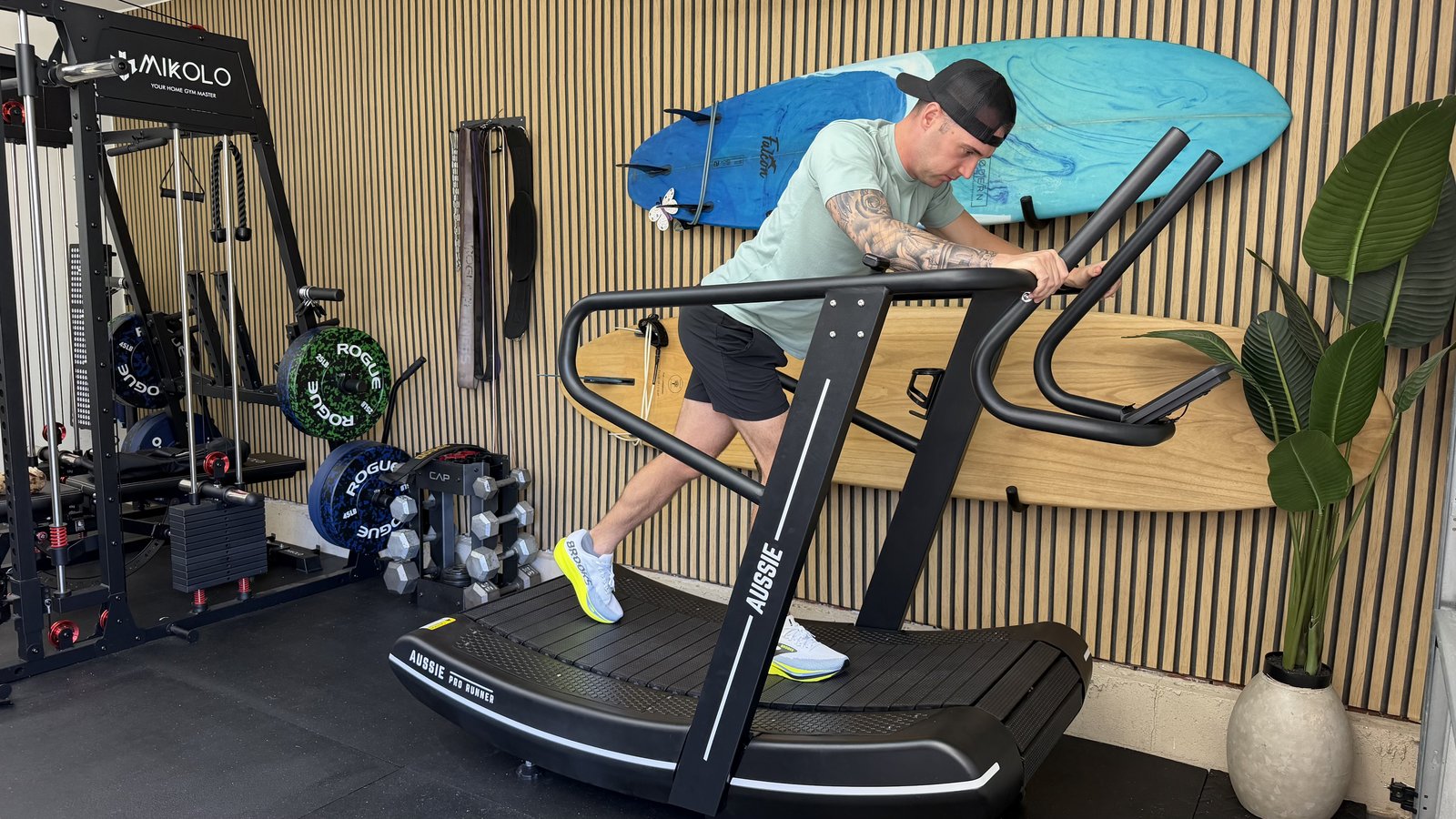
One piece of equipment that has fit seamlessly into my functional training style is the Aussie Pro Runner from Aussie Fitness Pros. What I appreciate about this piece of equipment is its versatility. It allows me to incorporate several different types of conditioning into my workouts without needing a separate machine for each activity.
Depending on the day and my training goals, I use it for:
- Sprinting
- High-intensity intervals
- Sled-style work
- Weighted vest workouts
- General walking, 10k a day keeps the DR away
That last one might seem less exciting than sprinting or pushing through a hard interval session, but it’s important. Not every workout needs to leave you lying on the floor. Consistent, lower-intensity movement has a place in a well-rounded fitness routine, too. I like having equipment that can support both ends of that spectrum — from deliberate, high-intensity conditioning to simply getting more movement into my day.
A couple ways this treadmill stands out:
1. No Motor, No Lag, No Speed Limit
One of the biggest differences with the Aussie Pro Runner is that it doesn’t have a motor driving the belt. The belt moves in response to your effort, meaning you control the pace.
When I’m sprinting, I don’t have to wait for a motor to accelerate or worry about reaching a machine’s programmed maximum speed. I can increase my effort when I’m ready and slow down when I need to recover. It’s also great when you’re doing a workout with prescribed rounds. I do a lot of EMOM (every minute on the minute) type of work, and being able to hop on/off and set your own pace immediately makes this a seamless fit.
2. A Different Way to Approach Conditioning
Running on a curved, non-motorized treadmill changes the experience compared to running on the road or using a conventional motorized treadmill. The surface feels more forgiving, which is definitely beneficial for me after having a major knee surgery. Plus, with the push of a knob this turns into a legitimate sled workout, which is one of my all-time favorite movements. From traditional sled work, to backwards walking, to single leg extensions, to banded hip openers, to monster walks and more — there are tons of options in this one machine.
Fitness Is About More Than You
Here’s something worth thinking about: Who benefits from your fitness besides you?
It’s easy to make fitness entirely about ourselves. We want to look better, build muscle, lose weight, or hit a personal record. Those are all valid goals, and there’s nothing wrong with wanting to improve your own health and performance. But I think there’s something powerful about connecting your training to the people who depend on you.
If you’re a parent, your kids benefit when you have the energy to play with them, the strength to keep up with them, and the health to stay involved as they grow older.
If you have a spouse or partner, maintaining your health can help you continue sharing experiences and building a life together for decades to come. And if you work in a profession where other people depend on you, whether you’re a first responder, a member of the military, or someone responsible for the safety and well-being of others — your physical readiness can have implications far beyond your own personal goals.
You don’t need to be an elite athlete to make a difference — you simply need to take your health seriously and work toward being the best version of yourself. For some people, that might mean starting with a daily walk. For others, it might mean returning to the gym, or finally building a consistent routine after years of putting everyone else first.
The important thing is to start somewhere and keep building.
Ask Yourself This
I want to leave you with a couple of questions.
If your child took off running across a field and you needed to catch up, how long could you run for before needing to stop and take a break?
If you were trapped in a burning building and had to navigate several hallways and flights of stairs to get to safety, would you have the endurance to keep moving when every second counts, or would you be struggling to catch your breath?
And most importantly:
If someone grabbed your child and ran away, how confident are you that you could catch them?
These aren’t questions designed to make you feel guilty about your current fitness level. They’re questions designed to help you think about what you’re training for, because life doesn’t always give you advance notice, and you don’t get to choose when you’ll need your fitness. And while physical fitness alone can’t guarantee your safety or anyone else’s, being stronger and better conditioned can give you more options when life gets difficult. For me, that motivation started during my time as a first responder. Today, it continues because I’m a husband and a father.
That’s why I train.
Watch the Full Review
For the visual learners, here’s my full breakdown and review video.
Watch on YouTubeFeatured in This Post
Aussie Fitness Pros — Aussie Pro Runner
Watch my full review →
If you have any questions, send me an email: adamckorson@gmail.com. I’d be more than happy to help!
*I am not a professional and do not claim to be. This post is for entertainment purposes only.
← Back to Blog